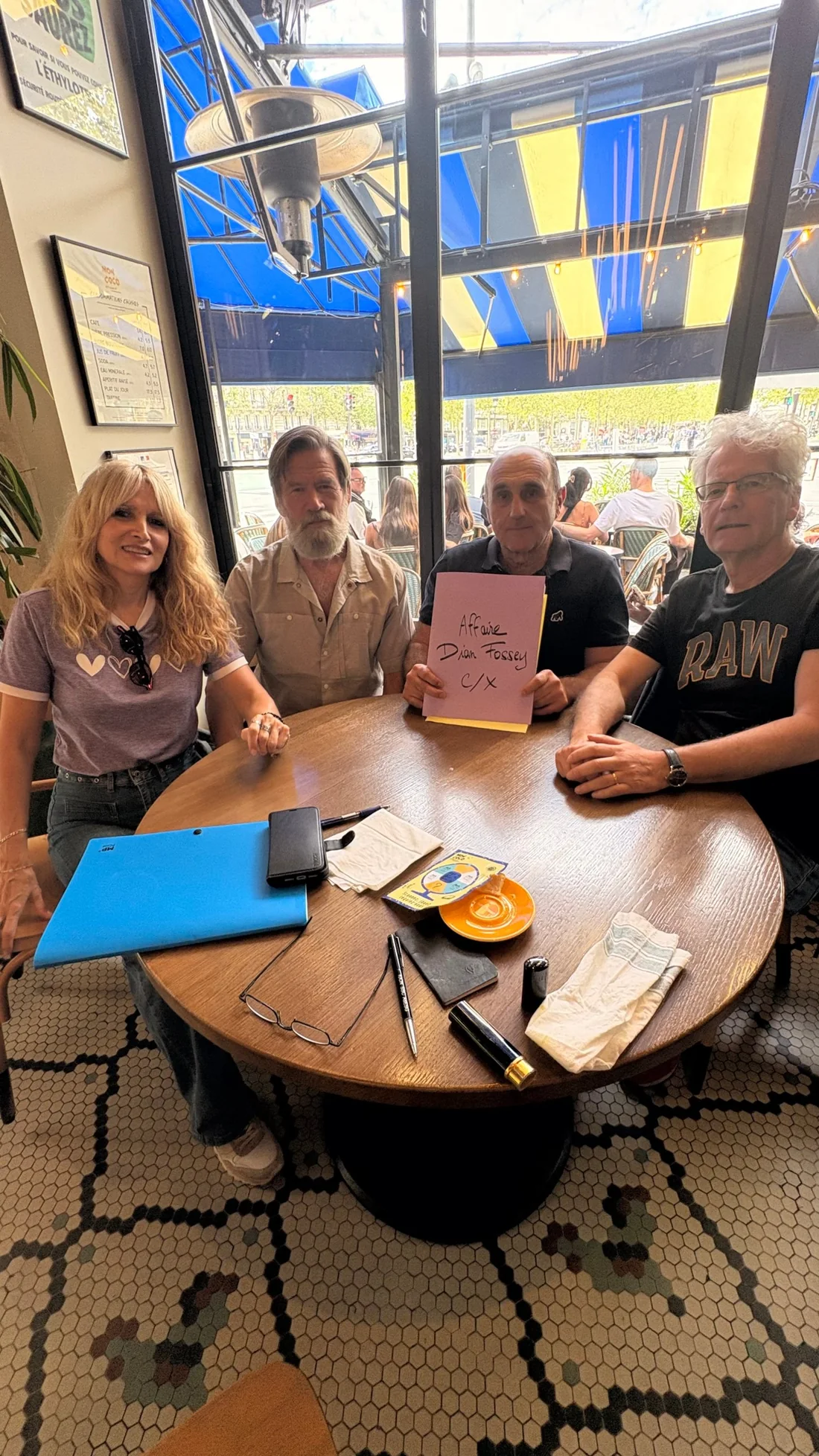
The investigation
The Dian Fossey case
Dian Fossey was murdered on the night of 26 to 27 December 1985 in her cabin in Volcanoes National Park, Rwanda. More than forty years later, the crime remains one of the greatest judicial mysteries of the 20th century.
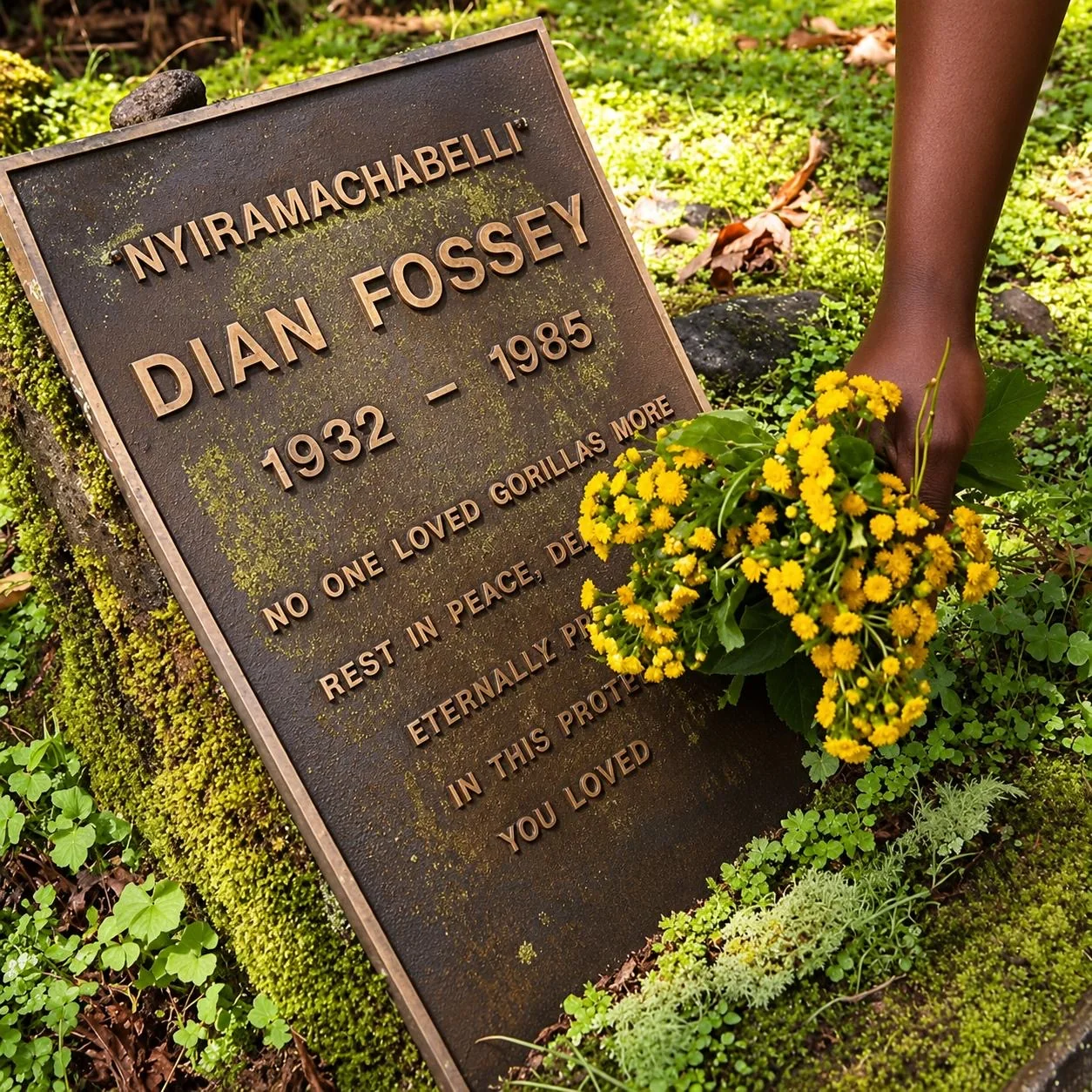
So that justice may be done!

The French association Gorilla was founded the day after Dian Fossey's murder, in tribute to the woman who gave everything to save the mountain gorillas, to the point of sacrificing her own life. It continues the work and ethics of the famous primatologist, whose image and memory it seeks to defend. It is a non-profit association with an international vocation, governed by the French law of 1901.
From France, Gorilla has undertaken to pursue every legal avenue to uncover the truth about the mysterious circumstances of her death. Identifying the perpetrator or perpetrators is the only way to obtain justice for her.
"The world is a dangerous place to live, not because of the people who are evil, but because of the people who don't do anything about it."
An extraordinary investigation
It is a fact: nobody has ever really uncovered the secret of that tragic night when Dian Fossey died under the blows of a machete. Revenge by poachers, against whom the primatologist had declared war? A premeditated murder by a jealous student, or one ordered by a high-ranking Rwandan official with an eye on the very lucrative revenue from gorilla tourism? There is no shortage of theories to explain this crime, which remains one of the greatest judicial mysteries of the 20th century.
For the first time, Fabrice Martinez has had access to the criminal archives and to physical evidence that still has probative value today. Key witnesses who had never spoken before have agreed to tell their truth. No investigation into the death of the famous primatologist has ever gone this far.
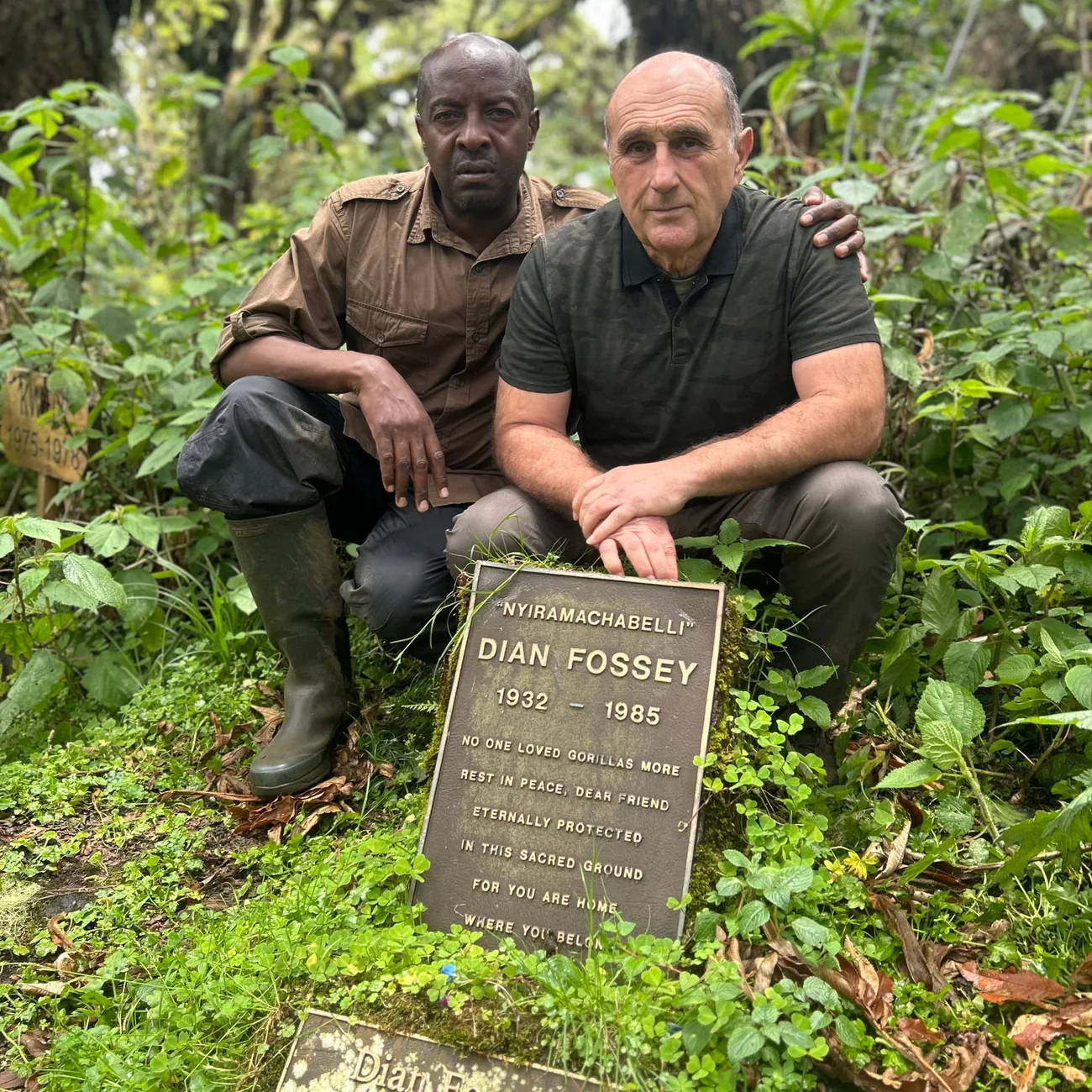
After thirteen years of an impossible investigation, Gorilla's founder believes he has found the answers to the many questions everyone is asking.
Coming soon A gripping account, to be published as a non-fiction book.
"No case can withstand a good investigation."
Press and media
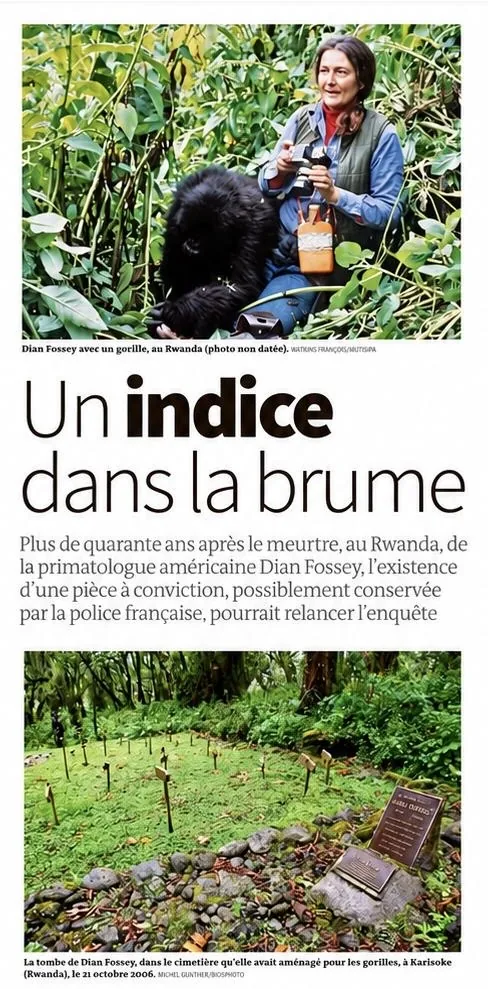
Le Monde
Are things finally moving?
On 1 April 2026, the French newspaper Le Monde published an article entitled "Un indice dans la brume" ("A clue in the mist"). More than forty years after Dian Fossey's murder in Rwanda, the existence of a piece of evidence kept in France could reopen the investigation.
"There is no shortage of theories, but we must keep hope, because science today makes it possible to solve cases several decades after the events."
— Fabrice Martinez, who is leading the investigation on behalf of the Gorilla association
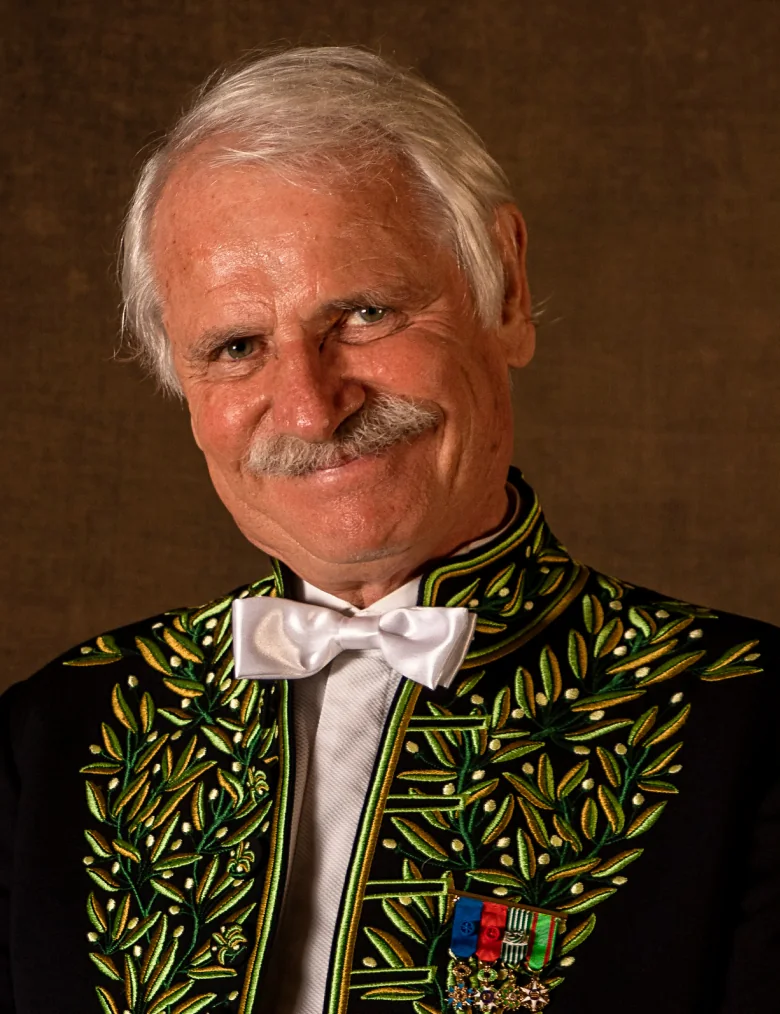
Yann Arthus-Bertrand, Ian Redmond and Dr Philippe Bertrand join Gorilla in its fight for the truth
Ahead of a new court hearing, the French association Gorilla has received the support of three prominent figures, all of them very close collaborators of Dian Fossey.
They are Yann Arthus-Bertrand, the famous French academician and photographer, who stayed at the Karisoke Research Center alongside Dian Fossey. He was the last person to photograph the primatologist, just a few days before her murder.
Dr Philippe Bertrand, the primatologist's last friend and confidant, was in Rwanda when his friend Dian Fossey was murdered. A doctor at Ruhengeri hospital, he was called to the crime scene. It was he who certified her death and examined the body, discovering hairs in the clenched hands of her corpse. It cannot be ruled out that this hair belonged to her killer.
Finally, Dr Ian Redmond, a British biologist, worked successfully on Dian Fossey's gorilla research. Highly regarded by the American primatologist, he was named in her will as a trustee of her foundation.